Multiflower honey and UV radiation: what laboratory research from Italy showed
Researchers from the University of Sassari examined whether multiflower honey may support skin cells in defending against ultraviolet radiation. The study was conducted on cells in the laboratory, not on humans.

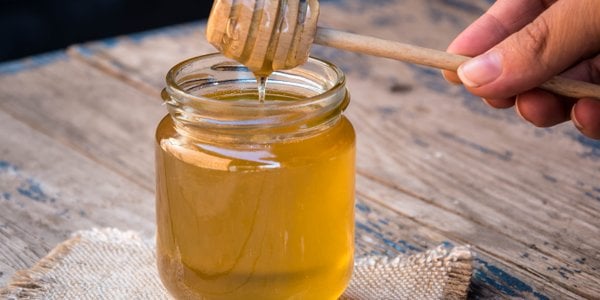
FlyD · Unsplash License
- 0views
- 0likes and saves
- 0skips
In brief
- A study from the University of Sassari examines whether multiflower honey supports skin cells in defending against UV radiation.
- The results come from experiments on cells in the laboratory, without human participants.
- The authors treat the finding as a preliminary stage that requires further research.
Honey beyond wound dressings
Its usefulness stems primarily from its antibacterial and anti-inflammatory action (Miód wielokwiatowy chroni skórę przed promieniowaniem UV? Nowe wyniki badań laboratoryjnych z Włoch – Dziennik.pl). The latest reports point to a different direction: protecting the skin from UV radiation (Ludzkość zna miód od ponad 10 tys. lat. Teraz naukowcy odkryli jego nowe właściwości – Rzeczpospolita).
What the laboratory observations showed
Researchers from the University of Sassari examined how human skin cells respond to multiflower honey after exposure to ultraviolet radiation. According to the observations, honey may support the cells' natural defense mechanisms, which lose their effectiveness under stress caused by UV. The scientists emphasize that this is only a preliminary stage and that the results do not automatically translate into an effect in humans.
What the study does not confirm
The work was carried out on cells in the laboratory, not on patients or volunteers. Honey does not replace sunscreen cosmetics, and further studies are needed to determine whether its effect has practical significance. The authors believe the discovery may in the future be used in cosmetology or medicine, but for now it is only a direction to be investigated.
Sources
Discussion0
- No comments from this perspective yet. Be the first.