Potatoes Grown in Simulated Lunar Soil Match Earth-Grown Performance
Researchers at Oregon State University report that potatoes can complete their full life cycle in simulated lunar regolith when it is enriched with organic matter, with growth and yields comparable to Earth-grown crops.

- 0views
- 0likes and saves
- 0skips
In brief
- Oregon State University researchers grew potatoes in simulated lunar soil and found their growth and yields comparable to Earth-grown plants.
- Adding about 30% organic vermicompost to the simulant was key, as it lowered the toxic effect of heavy metals on roots.
- The work supports NASA's Artemis goal of producing food on the Moon instead of relying on costly resupply from Earth.
Potatoes on the Moon
Scientists working on a project backed by NASA say potatoes could become a core food source for a future lunar base. A team at Oregon State University grew potatoes in simulated lunar soil and concluded that the crop performs in a way that could support long-term human presence on the Moon (Potatoes grown in simulated lunar soil match Earth-grown performance – Phys.org).
The soil problem
Lunar regolith, the loose layer of dust and broken rock covering the surface, contains almost no organic material and can carry elevated levels of heavy metals. Those conditions are the main obstacle to growing food locally (Космические агротехнологии. Картофель из имитированного лунного грунта не уступает земному по качеству — ученые – NV) (Raumfahrt: Wurmkompost ermöglicht Kartoffelanbau auf simuliertem Mondboden – DER SPIEGEL).
What the experiment found
The researchers tested five simulants and mixed in different amounts of vermicompost, an organic amendment produced by earthworms. Plants grown in a simulant containing 30% vermicompost developed as well as those in ordinary Oregon soil. According to the study, the organic matter binds heavy metals and reduces their toxic effect on roots. Plants with no amendment, or with only small amounts, did worse.
The team reported that the harvested potatoes are safe to eat.
Why it matters
NASA's Artemis program aims to establish a lasting human presence on the Moon. Resupplying a base from Earth would be costly, so local food production is a practical priority. Aymeric Goyer, a botanist on the team, described the result as an important step toward reliable food systems for long-term lunar exploration.
The findings were published in the journal npj Microgravity under the title "Growth and molecular responses of potato to lunar regolith simulants".
Who this affects
The work is aimed at future crews and planners of a lunar base. It does not describe any existing lunar farm; the experiments were carried out in laboratory conditions using simulated soil.
Sources
- [1]
 Potatoes grown in simulated lunar soil match Earth-grown performance· Phys.org
- [2]
 Raumfahrt: Wurmkompost ermöglicht Kartoffelanbau auf simuliertem Mondboden· DER SPIEGEL
- [3]
 Космические агротехнологии. Картофель из имитированного лунного грунта не уступает земному по качеству — ученые· NV
- [4]
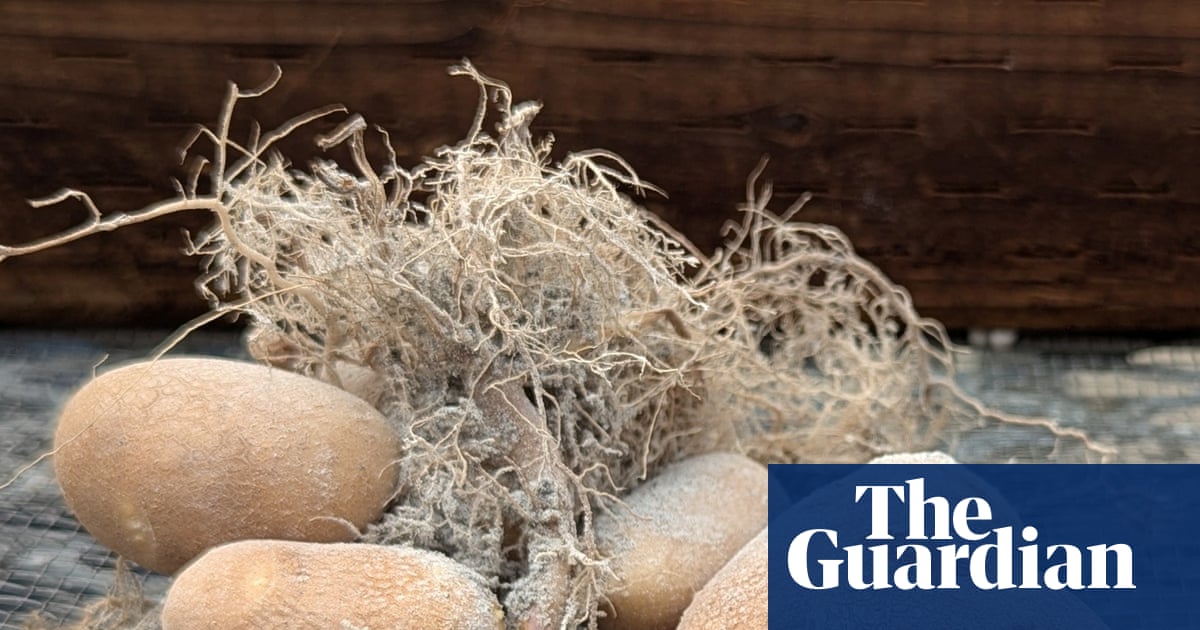 Spuds in space: scientists say potatoes could be key food source for future moon base· The Guardian
Discussion0
- No comments from this perspective yet. Be the first.