Russia has closed about one in six maternity wards since 2020, BBC Russian count shows
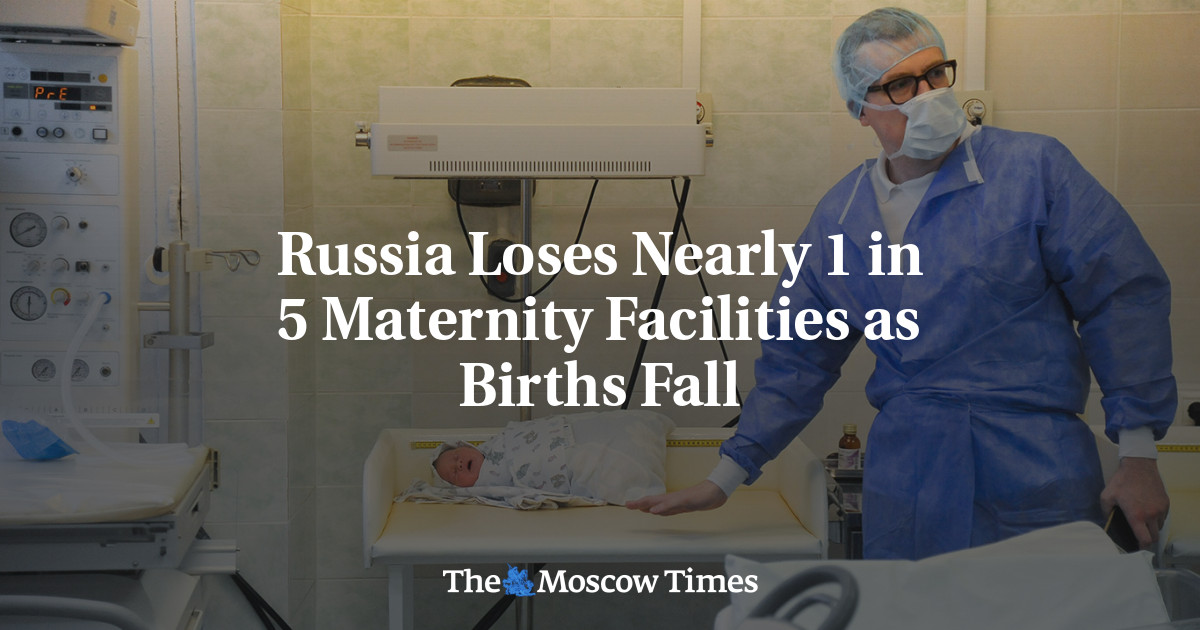
The number of facilities offering childbirth in Russia and annexed Crimea has fallen by 18 percent since late 2020, according to a count by BBC Russian. Officials attribute the closures to falling birth rates and worsening health among women.

Martha Dominguez de Gouveia · Unsplash License
- 0views
- 0likes and saves
- 0skips
In brief
- Russia and annexed Crimea have lost roughly one in six facilities where women can give birth since late 2020.
- Most closures affect small towns and rural districts, where patients now often travel far to reach a maternity ward.
- Officials cite falling birth rates and worsening health among women, while data on births is limited after Rosstat stopped publishing in 2025.
Scale of the closures
The number of medical facilities where women can give birth in Russia and annexed Crimea dropped from 1,334 at the end of 2020 to 1,090, a fall of about 18 percent, according to the BBC's Russian service, which based its count on the federal register of medical organisations (V Rusku od roku 2020 zanikla takmer pätina pôrodníc, starostlivosť sa presúva do veľkých centier – HNonline.sk) (Russia Loses Nearly 1 in 5 Maternity Facilities as Births Fall – The Moscow Times) (С 2020 года в России закрылось как минимум каждое шестое родильное отделение – Novaya Gazeta Europe) (За шесть лет в России закрыли каждый шестой роддом, подсчитала «Русская служба Би-би-си». Чиновники объясняют это снижением рождаемости и ухудшением здоровья женщин – Meduza).
Where the cuts are hitting hardest
The reductions fall mainly on small towns and rural districts. Since late 2020, 167 district hospitals have stopped delivering babies, and another 39 have kept only emergency rooms for urgent births. For about half of the affected hospitals, the nearest maternity ward is now 50 kilometres away or more.
Cities are not spared. In Krasnoyarsk, two of five municipal maternity hospitals are being closed, and in 2025 all four remaining first-level delivery wards in the Moscow region shut down.
Official explanation and the patients' view
Officials link the closures to the age of many wards and to the small number of births they handle, which they say does not justify keeping them open. They argue that large perinatal centres have better equipment for complicated deliveries and for the care of mothers and newborns. Officials call the transfer of patients to these centres "routing".
For women, the change means longer journeys. Women who go into labour before their due date can face a long trip to reach a hospital, and some district hospitals now keep only rooms where staff can give basic care until a patient can be moved. Some regions have no perinatal centre at all, so complicated cases must be sent to neighbouring regions.
Protests and data gaps
BBC Russian counted at least 19 protests and campaigns against closures over five years, but only one known case has gone to court. Independent assessment is also harder because Rosstat stopped publishing birth and mortality statistics in spring 2025, and the latest available birth data runs only to 2024.
Sources
- [1]
За шесть лет в России закрыли каждый шестой роддом, подсчитала «Русская служба Би-би-си». Чиновники объясняют это снижением рождаемости и ухудшением здоровья женщин· Meduza
- [2]С 2020 года в России закрылось как минимум каждое шестое родильное отделение· Novaya Gazeta Europe
- [3]
 Russia Loses Nearly 1 in 5 Maternity Facilities as Births Fall· The Moscow Times
- [4]
 V Rusku od roku 2020 zanikla takmer pätina pôrodníc, starostlivosť sa presúva do veľkých centier· HNonline.sk
Discussion0
- No comments from this perspective yet. Be the first.