Latvia Moves to Ban Transit of Russian and Belarusian Grain Under National Sanctions
Latvia's foreign ministry has drafted a government regulation that would bar grain of Russian and Belarusian origin from transiting its territory, using a national sanctions mechanism. The move follows a failed push for a common EU-wide ban.


In brief
- Latvia's foreign ministry has submitted a draft government regulation to ban transit of Russian and Belarusian grain.
- The ban would be imposed through national sanctions because EU members have not backed a common measure.
- The ministry flags possible court disputes, transport sector impacts and budget losses, and Ukraine's foreign minister has welcomed the move.
Draft regulation sent to the prime minister
The Latvian Ministry of Foreign Affairs, working with other state bodies, has prepared a draft Cabinet of Ministers regulation that would prohibit the transit of grain originating in Russia and Belarus. The ministry said on 13 November that the draft has been submitted to Prime Minister Andris Kulbergs (Латвія готує заборону на транзит зерна з РФ і Білорусі: Сибіга подякував за цю ініціативу – Espreso) (В Латвии готовят запрет транзита зерна из Беларуси и России – Zerkalo) (МИД Латвии предложил запретить транзит зерна из Беларуси и России – Reform.news). Foreign Minister Baiba Braže said the risks of such a decision had been identified and are manageable, and that only a government decision is now needed to bring the ban into force.
Why national rather than EU measures
The ministry acknowledged that member states do not yet back a single, bloc-wide ban on transit of grain from Russia and Belarus. Latvia had presented three options to the government on 13 October, one of which involved EU-level sanctions. Since that route lacks sufficient support, the draft relies on national sanctions. The ministry says it will keep pushing for a coordinated approach within the EU.
Legal and economic risks
The ministry warned that the measure could trigger court claims over contracts already signed, affect the transport and logistics sector, and reduce state budget revenue. The draft must also comply with EU law (Сибіга подякував за рішучість Латвії, яка готує заборону транзиту російського зерна – Європейська правда). The mechanism would set specific restrictions while providing for monitoring and liability for violations.
Background and reaction
Latvia's parliament, the Saeima, called on the government in September to create a legal basis for banning grain imports from Belarus and Russia, including transit. Latvia already bans imports of agricultural and feed products from both countries. Ukraine's foreign minister, Andrii Sybiha, welcomed the initiative, saying Russia had tried to use Baltic states for grain transit to finance its war against Ukraine and that Kyiv had moved to block those plans.
Read also
- Lithuania to hold Russian and Belarusian grain at Klaipeda port for origin tests that could take months
Sources
- [1]
 МИД Латвии предложил запретить транзит зерна из Беларуси и России· Reform.news
- [2]
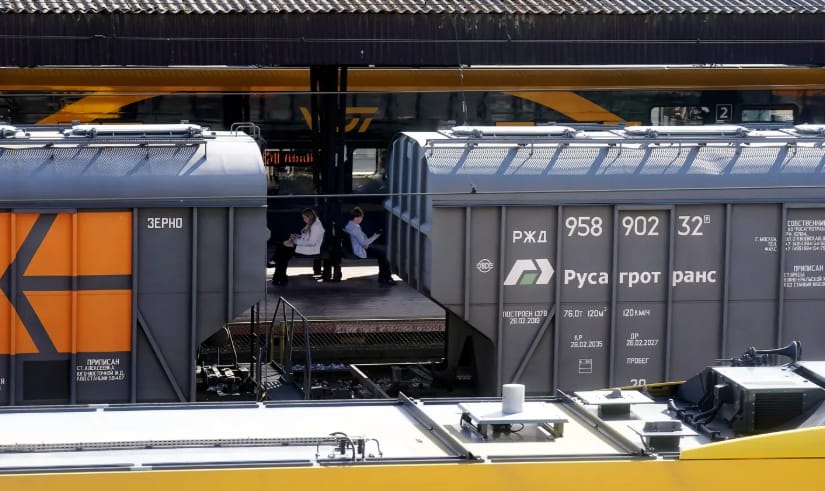 Сибіга подякував за рішучість Латвії, яка готує заборону транзиту російського зерна· Європейська правда
- [3]
 В Латвии готовят запрет транзита зерна из Беларуси и России· Zerkalo
- [4]Латвія готує заборону на транзит зерна з РФ і Білорусі: Сибіга подякував за цю ініціативу· Espreso
- #Latvia
- #GrainTransit
- #Russia
- #Belarus
- #Sanctions
- #EU
- #BaibaBraže
- #AndrisKulbergs
Story graph
Connected stories
Latvia Moves to Ban Transit of Russian and Belarusian Grain Under National Sanctions
Latvia's foreign ministry has drafted a government regulation that would bar grain of Russian and Belarusian origin from transiting its territory, using a nati…