Voyager 1 reaches one light-day from Earth, the farthest human-made object ever
NASA's Voyager 1 probe crossed the distance of one light-day from Earth on Wednesday, 18 November, becoming the most distant human-made object. The milestone came almost 49 years after its 1977 launch. Propaganda-linked outlet The Insider (Russia) reported the same milestone; it is confirmed by the…

Alessandro Ferrari · Unsplash License
- 0views
- 0likes and saves
- 0skips
In brief
- NASA's Voyager 1 probe reached a distance of one light-day from Earth on 18 November, making it the farthest human-made object.
- The journey took almost 49 years since the 1977 launch, and the probe is about 25.8 billion kilometers from Earth.
- Engineers must wait about a day for a return signal to confirm the milestone, and the probe still sends back data from interstellar space.
A symbolic distance reached
NASA said Voyager 1 passed the point where a signal sent from Earth needs 24 hours to arrive, which is the distance light covers in one day, about 25.8 billion kilometers or roughly 16 billion miles (Voyager 1: Raumsonde der Nasa einen Lichttag von der Erde – DER SPIEGEL) (So weit wie noch nie: Raumsonde "Voyager 1" - einen Lichttag von Erde entfernt – tagesschau.de) (Far from home. Voyager 1 is now farther than anything man has sent into space – NPR). The crossing was calculated for 11:16 Central European Time on Wednesday (Voyager 1 se dostal na vzdálenost světelného roku od Země. Sondu NASA vypustila před téměř 50 lety – iROZHLAS) (NASA's Voyager 1 reaches a light-day away from Earth – DW).
Confirmation takes a day
Engineers at the Jet Propulsion Laboratory in California will have to wait about a day for a signal from the probe to confirm the position. An event to mark the milestone was planned for Thursday.
A journey of nearly 50 years
Voyager 1 launched in 1977 and passed Jupiter and Saturn in 1979 and 1980. Its original mission lasted only four years, but the probe kept working and entered interstellar space in 2012 (Raumsonde - Voyager 1 einen Lichttag von der Erde entfernt – Deutschlandfunk) (NASA’s Voyager 1 probe is now one light-day away – The Verge). It still sends back readings on magnetic fields, pressure, dust and cosmic radiation. The probe travels at about 61,000 kilometers per hour.
Records and the sister probe
Voyager 1 is farther from Earth than any other object people have sent into space. Its twin, Voyager 2, launched a few weeks earlier, is on a different route and is expected to reach the same one-light-day mark only around 2035, according to Russian-language reporting from The Insider (Рукотворный объект впервые удалился от Земли на расстояние светового дня. Зонду Voyager 1 понадобилось для этого почти 50 лет – The Insider).
Public marking
NASA invited the public to mark the occasion by flashing the probe's call sign, V-G-R, in Morse code into the night sky with flashlights or phone lights. The spacecraft also carries a golden record with music, sounds of Earth and greetings from humanity.
Sources
- [1]
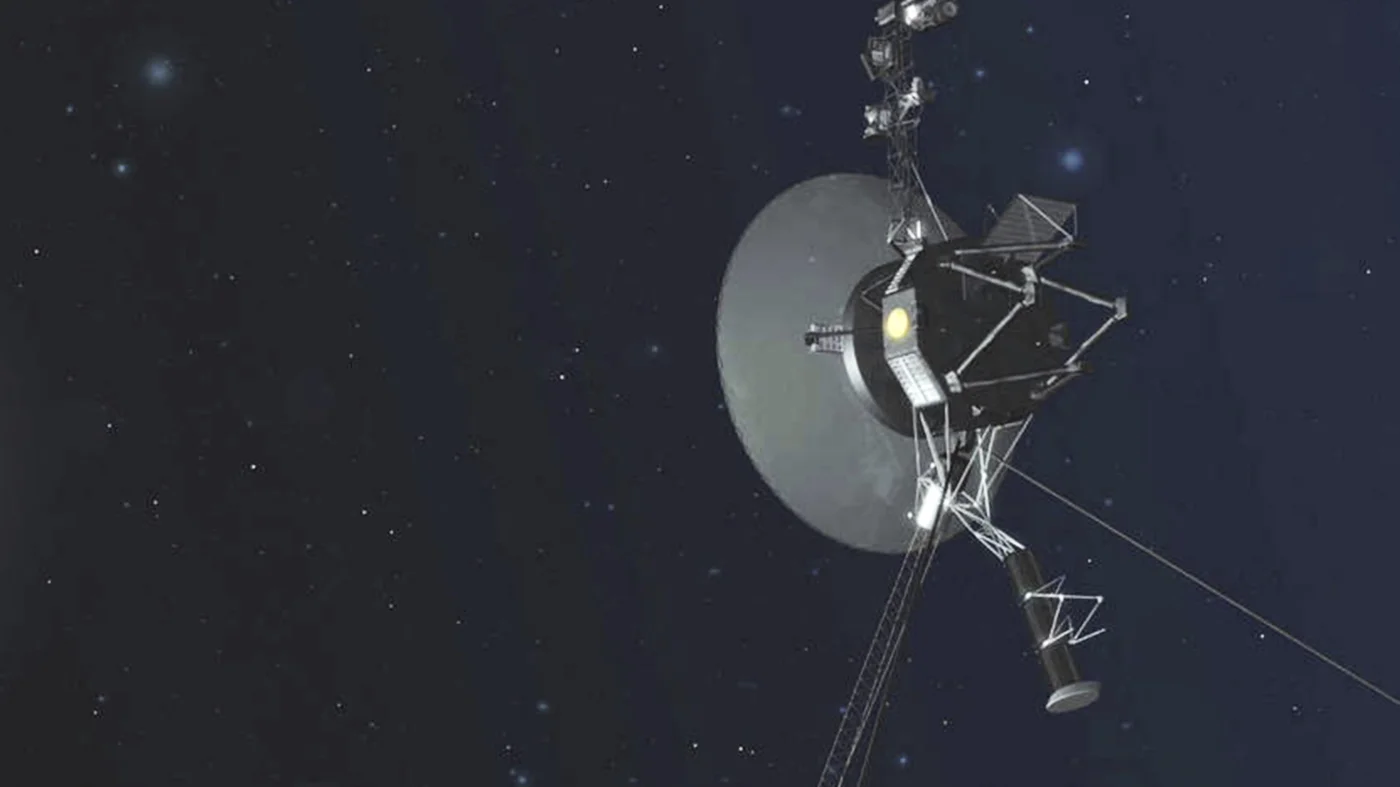 Far from home. Voyager 1 is now farther than anything man has sent into space· NPR
- [2]
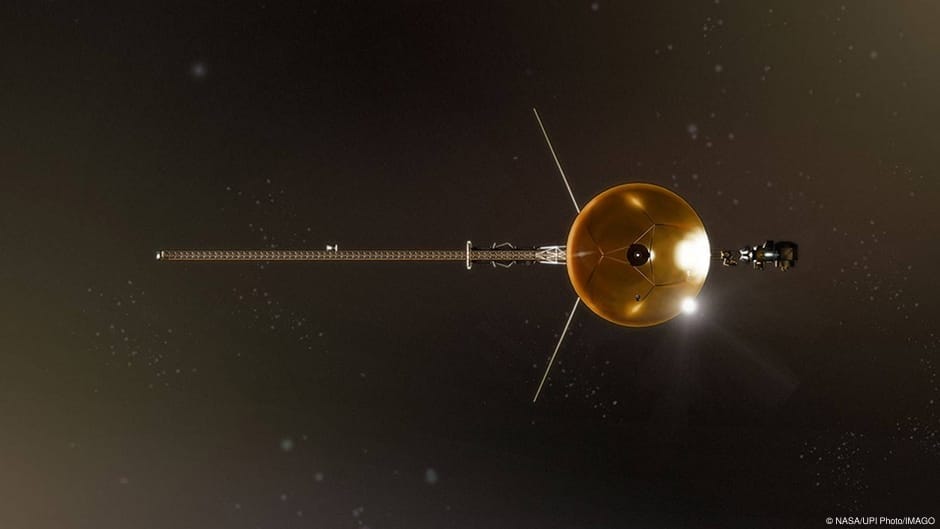 NASA's Voyager 1 reaches a light-day away from Earth· DW
- [3]
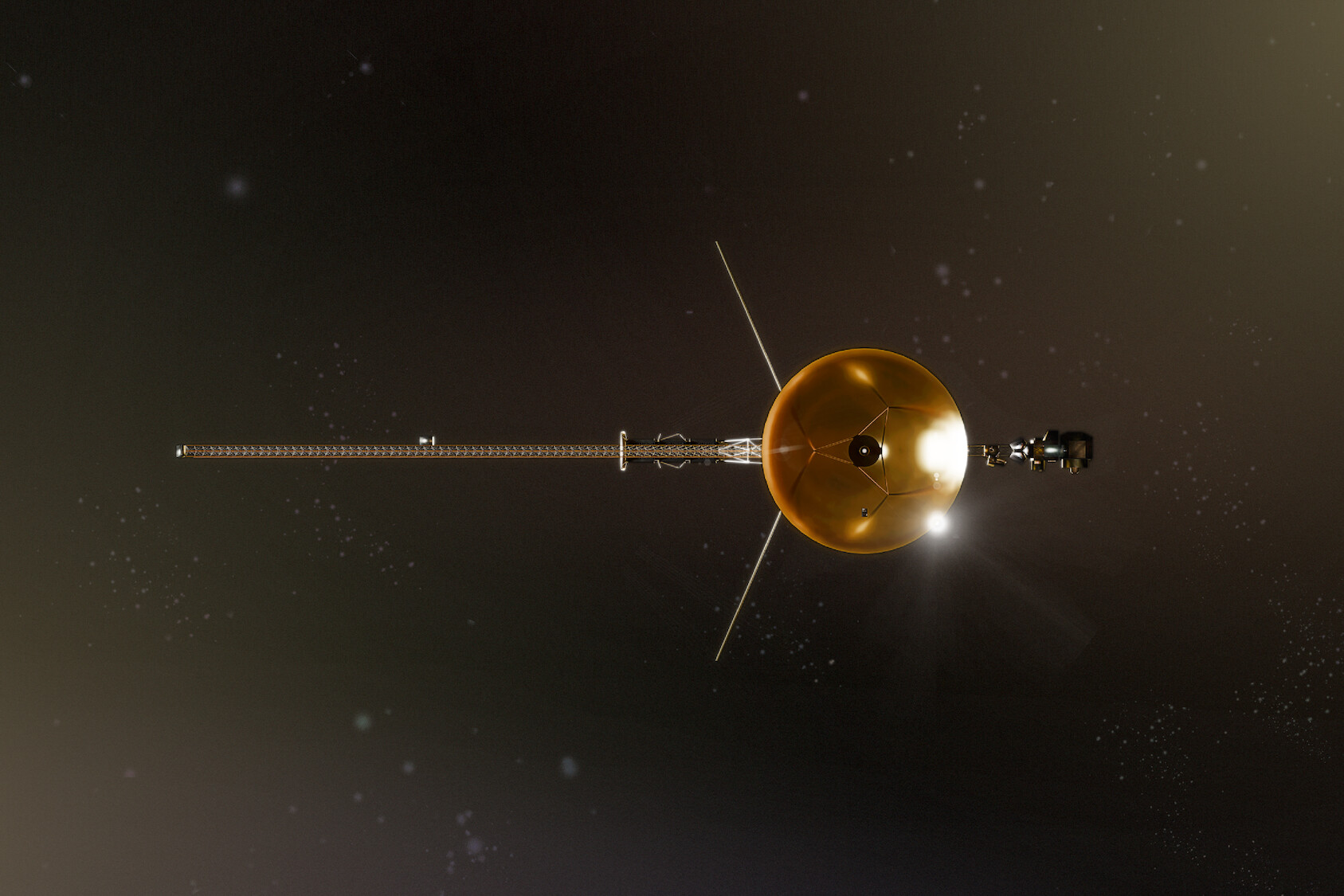 Рукотворный объект впервые удалился от Земли на расстояние светового дня. Зонду Voyager 1 понадобилось для этого почти 50 лет· The Insider
- [4]
 Raumsonde - Voyager 1 einen Lichttag von der Erde entfernt· Deutschlandfunk
- [5]
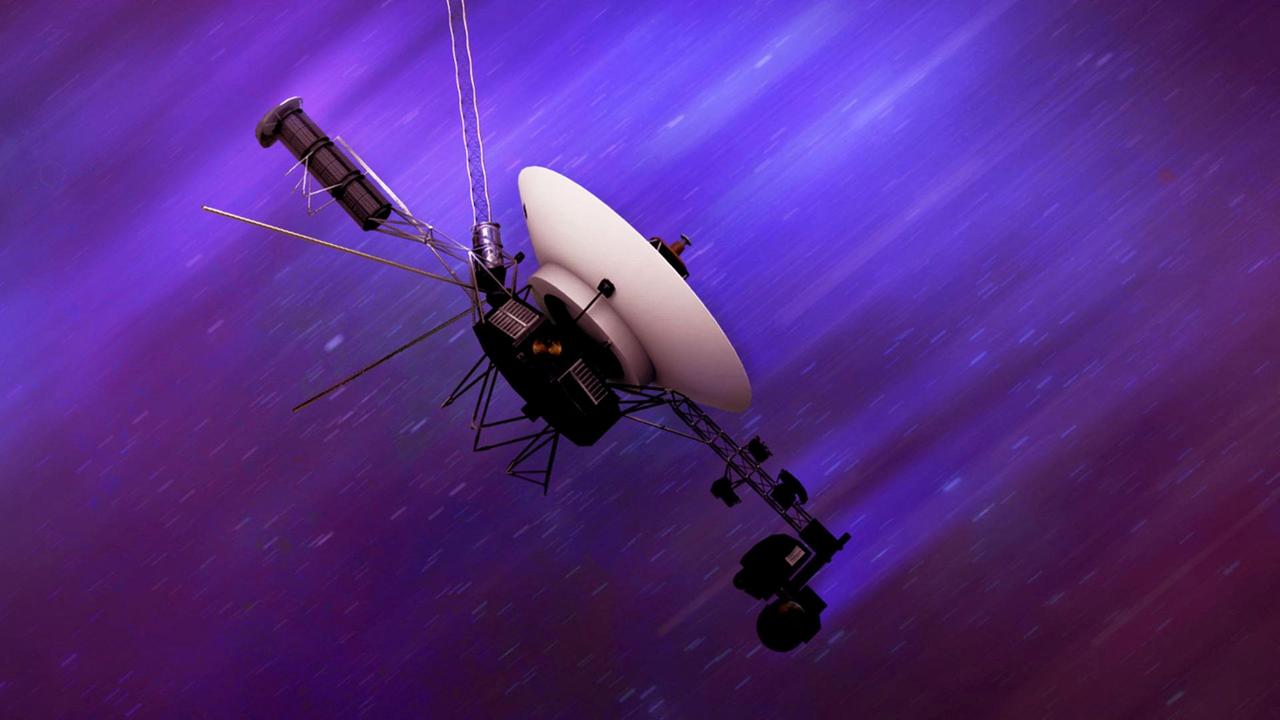 So weit wie noch nie: Raumsonde "Voyager 1" - einen Lichttag von Erde entfernt· tagesschau.de
- [6]NASA’s Voyager 1 probe is now one light-day away· The Verge
- [7]
 Voyager 1: Raumsonde der Nasa einen Lichttag von der Erde· DER SPIEGEL
- [8]
 Voyager 1 se dostal na vzdálenost světelného roku od Země. Sondu NASA vypustila před téměř 50 lety· iROZHLAS
Discussion0
- No comments from this perspective yet. Be the first.